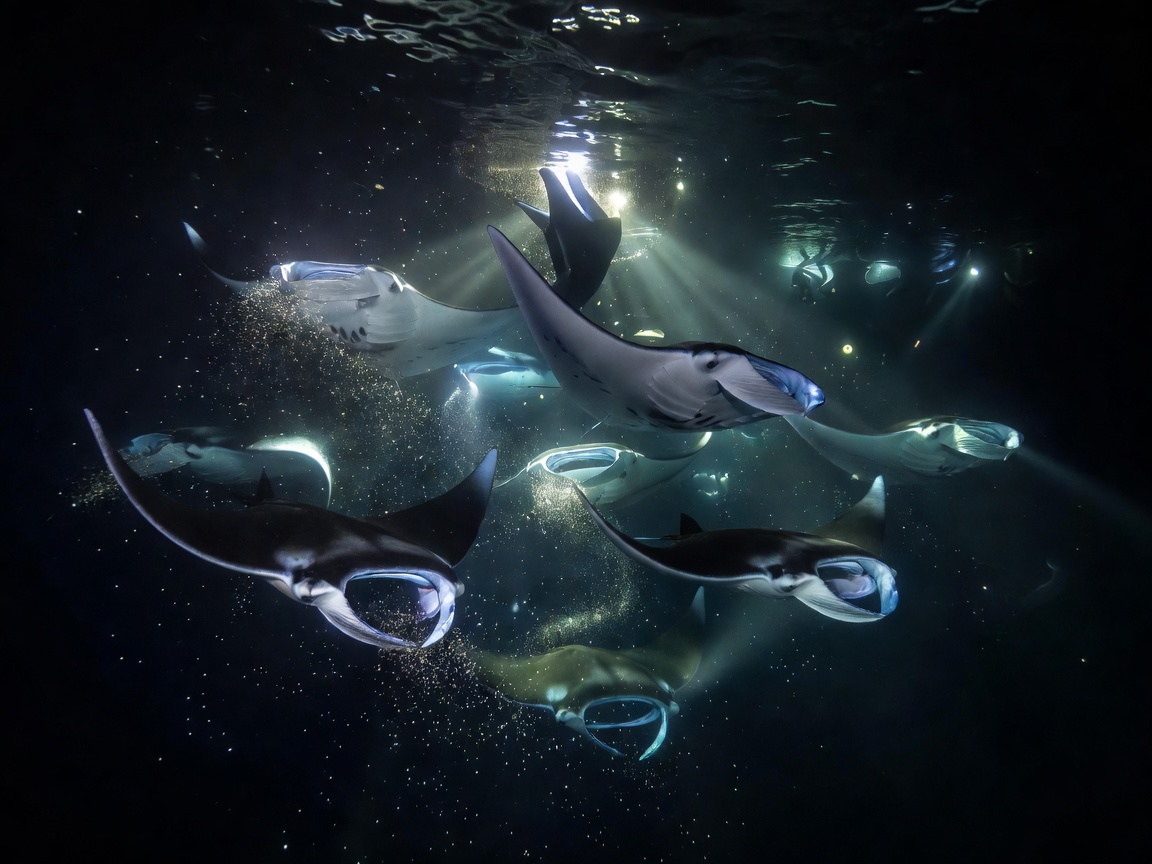
Off the rocky volcanic coastline of Kailua-Kona, Hawaii, an unearthly nocturnal ritual takes place every single night. Under the cover of total ocean darkness, divers and snorkelers plunge into the Pacific with high-powered floodlights pointing upward from the seabed or floating light boards.
What responds to these light rays is nothing short of breathtaking: giant reef manta rays (Mobula alfredi) with wingspans measuring up to 16 feet (5 meters) glide in from the open ocean, conducting continuous underwater somersaults mere inches from human observers.
The Magnet of Phytoplankton
The manta rays are not attracted by human interaction or artificial feeding. Instead, the bright artificial light beams attract millions of microscopic zooplankton that concentrate in dense, glowing clouds. Recognizing this easy nocturnal banquet, local manta rays gather to perform backward barrel rolls through the plankton soup, scooping up tons of food with open cephalic fins.
"Watching a 1,000-pound shadow swoop out of the black void, open its cavernous white mouth, and gracefully turn inches above your snorkel mask is an unforgettable adrenaline charge."
Conservation & Passive Observation
Hawaii enforces strict non-touching protocols to protect the delicate mucous coating on manta skin that protects them from bacterial infection. Divers rest on the seabed bottom ("The Campfire") while snorkelers grip floating light rafts on the surface, letting the gentle giants control all movement.
Night Expedition Insights
- Location: Keauhou Bay and Garden Eel Cove off the Kona Coast of the Big Island.
- No Teeth, No Stingers: Manta rays are filter feeders with no barbs or venomous tails, making them harmless to humans.
- Individual Markings: Each manta features a unique pattern of dark spots on its belly, serving as a biological fingerprint for local reef trackers.